

Home | Guides |
Jump to: THE DISCOVERY SHIFT | WHAT AEO ACTUALLY MEANS| EXAMPLE ONE | EXAMPLE TWO | THE DISCOVERY NETWORK | WHY EXPOSURE MATTERS | THE BLACKSUN APPROACH | CLEAR STANDARDS | work with blacksun | faqs | related articles
Your Next Reader May Never Search for Your Book by Name
A reader may ask for an atmospheric crime novel with an unreliable narrator. A dark fantasy with a morally conflicted heroine. A historical novel built around divided loyalties.
They may never have heard of you. They may never have encountered your title. But they know exactly what they want to read.
Answer Engine Optimization creates new public routes through which the right book may become part of the answer.
01
THE DISCOVERY SHIFT
The Reader Begins With a Desire, Not a Title
Readers have always searched for books by title, author, and genre. That has not disappeared.
What has changed is the precision of the question.
A reader can now ask Google or an AI assistant for a book built around a particular atmosphere, kind of character, emotional conflict, setting, relationship, theme, or reading experience. One natural-language question can replace several separate searches.
For independent authors, this matters enormously.
The discovery contest no longer has to begin with name recognition alone. The reader does not necessarily need to know that the book exists before beginning the search. The title can enter the conversation because its qualities correspond with what that reader wants.
Answer Engine Optimization may prove to be one of the most important book-discovery developments for independent authors since the invention of the ebook.
It does not make fame irrelevant. It does not guarantee placement. It changes the starting point.
The reader begins with a desire, not a title.
02
WHAT AEO ACTUALLY MEANS
Making the Qualities Readers Care About Publicly Visible
WHAT AEO ACTUALLY MEANS
Making the Qualities Readers Care About Publicly Visible
Answer Engine Optimization is the work of making the qualities that matter to readers specific, public, and clearly connected with the book.
That might include its:
- Genre and subgenre
- Atmosphere and tone
- Setting and period
- Central relationship
- Character type
- Emotional journey
- Narrative structure
- Themes and conflicts
- Pace and reading experience
AEO is not a secret switch inside Google, Goodreads, or an AI assistant.
The opportunity lies in the public information surrounding a book: its listings, metadata, author profiles, reviews, reader shelves, questions, answers, quotes, discussions, website content, and the language readers naturally use when talking about it.
Every relevant public connection gives search and answer systems another possible route through which the title can be understood.
Blacksun’s approach is therefore not built around pretending that we can command an algorithm. It is built around creating and promoting legitimate, book-specific discovery routes.
AEO does not replace book promotion. It gives book promotion a new destination.
03
EXAMPLE ONE
How BookABC Could Enter a Search It Was Never Named In
EXAMPLE ONE
How BookABC Could Enter a Search It Was Never Named In
-
01 — A GENUINE READER QUESTION
A reader posts the following question to the Goodreads page for BookABC:
“Would you describe BookABC as atmospheric crime fiction, and how far can its narrator be trusted?”
The question is attached to the title and invites genuine discussion about the book.
-
02 — A PUBLIC CONNECTION
The question and its answers publicly connect BookABC with several useful ideas:
- Atmospheric crime fiction
- An unreliable narrator
- Questions of trust
- A particular kind of reading experience
Those concepts are now present in reader-facing language surrounding the book.
-
03 — A DIFFERENT READER, SOME TIME LATER
Someone who has never encountered BookABC asks:
The questions are not identical.
They do not need to be.
They share the same underlying discovery language and the same reader intent.
-
04 — A NEW ROUTE INTO CONSIDERATION
The Goodreads discussion does not guarantee that BookABC will be recommended.
It does, however, give search and answer systems another relevant public source through which the title may be understood and considered alongside other available information.
Should the book be surfaced, the next stage belongs to the book itself.
04
EXAMPLE TWO
Different Words. The Same Discovery Intent.
EXAMPLE TWO
Different Words. The Same Discovery Intent.
-
A reader posts the following question to the Goodreads page for BookXYZ:
“Would you describe BookXYZ as dark fantasy, and is its heroine meant to be morally conflicted?”
-
Some time later, another reader asks an AI assistant:
“Can you recommend a dark fantasy with a morally conflicted female lead?”
Again, the wording is not identical. But both questions connect the same important ideas:
- Dark fantasy
- A female protagonist
- Moral conflict
- A particular character experience
The Goodreads discussion has publicly connected BookXYZ with the qualities the later reader is seeking.
That does not force a recommendation. It creates another public route through which an unknown title may enter the conversation.
And that is the opportunity.
The reader does not have to know the book. The public information around the book has to correspond with what the reader wants.
05
THE DISCOVERY NETWORK
One Question Creates One Route. The Right Campaign Creates Many.
THE DISCOVERY NETWORK
One Question Creates One Route. The Right Campaign Creates Many.
Now imagine this happening across the different qualities that make your book worth choosing.
-
ATMOSPHERE
Does the book feel claustrophobic, melancholy, unsettling, hopeful, romantic, or quietly ominous?
-
CHARACTER
Is the central character idealistic, morally compromised, unreliable, reluctant, obsessive, or searching for redemption?
-
SETTING
Is the location simply a backdrop, or does the coastal town, isolated estate, ruined city, or historical period shape everything that happens?
-
RELATIONSHIPS
Is the central connection romantic, adversarial, familial, professionally dependent, or difficult to define?
-
EMOTIONAL JOURNEY
Is the book ultimately comforting, devastating, cathartic, unsettling, or unexpectedly hopeful?
-
READING EXPERIENCE
Is it a slow burn, a tightly plotted mystery, a dual-timeline story, a character-led novel, or a book built around mounting dread?
Each genuine question creates another possible point of connection.
The objective is not to repeat one phrase until it looks promotional. It is to let real readers describe the book truthfully from several useful angles.
One question may connect a title with its atmosphere. Another may clarify its central relationship. Another may reveal the kind of reader who is most likely to appreciate it. Another may identify a theme that is barely visible in the official description.
Together, those discussions can build a much richer public understanding of what the book actually offers.
06
WHY EXPOSURE MATTERS
A Public Question Without Attention Is Still a Quiet Page
WHY EXPOSURE MATTERS
A Public Question Without Attention Is Still a Quiet Page
A Goodreads question may be public, but public is not the same as visible.
An isolated question with no answers, discussion, or supporting activity may contribute very little. No platform publishes a formula in which a particular number of answers or likes suddenly turns a question into an authoritative AEO source.
We will not invent such a threshold.
What genuine engagement can do is make the discussion more visible, more substantial, and more useful to the readers who encounter it.
That is why AEO cannot sensibly be separated from the rest of the book’s discovery footprint.
The strongest opportunity comes when relevant Reader Q&A exists alongside:
- An accurate Goodreads book record
- A complete author profile
- Genuine ratings and reviews
- Relevant reader shelves
- Reader-posted quotes
- Consistent genre and edition information
- A clear book description
- Wider reader awareness
- Connected public information across other book platforms
Each element complements the others.
The questions provide specific language. The answers add context. Reviews provide detailed reader interpretation. Shelves add reader-created classification. Accurate listings identify the correct book and edition. Promotion helps interested readers encounter and engage with the entire body of content.
This is why extensive, relevant exposure matters.
Not because promotion presses a hidden algorithmic button, but because it gives worthwhile public content a realistic opportunity to be seen, discussed, connected, and discovered.
07
THE BLACKSUN APPROACH
How We Build an AEO-Focused Campaign Around a Book
THE BLACKSUN APPROACH
How We Build an AEO-Focused Campaign Around a Book
Every book offers different discovery opportunities.
A dark literary novel should not be approached in the same way as a romantic comedy, historical biography, psychological thriller, memoir, or epic fantasy series. The work begins with the individual book.
We examine the supplied book materials, genre, tone, themes, intended readership, current positioning, Goodreads presence, and the public language already surrounding the title.
We identify the genuine qualities through which an interested reader might search for this particular book. That includes more than broad genre labels. It may include atmosphere, setting, character conflict, narrative structure, emotional effect, relationship dynamics, or the kind of reader experience the book provides.
We turn those truthful book qualities into potential areas of reader discussion. These are topic opportunities rather than manufactured opinions. The purpose is to help genuine readers recognise useful questions they may already have about the book.
By liaising with readers taking part in our promotions, we help them understand the discovery value of specific, thoughtful questions. The reader decides whether a subject genuinely reflects their reading experience and expresses the question in their own words.
We promote the book and its relevant reader-facing content so that the questions do not sit in isolation. The work is designed around the wider discovery environment: questions, answers, reviews, shelves, listings, author information, and the other public elements through which readers and platforms understand the book.
Before purchase, the author receives a written package description setting out the proposed work, deliverables, timing, price, requirements, and service limits. Once completed, the delivered promotional work is clearly recorded.
The work is coordinated. The opinions are not.
That distinction matters.
Blacksun can research the opportunity, shape the campaign, liaise with participating readers, promote the relevant content, and deliver the work agreed in writing.
Readers remain free to ask, answer, interpret, agree, disagree, engage, or decline to engage according to their own genuine experience of the book.
That is how useful reader content retains its value.
08
CLEAR STANDARDS
Real Readers. Genuine Questions. Defined Promotional Work.
CLEAR STANDARDS
Real Readers. Genuine Questions. Defined Promotional Work.
Goodreads Reader Q&A exists for readers to ask relevant questions about books and receive answers from other members.
Every question used within an AEO-focused campaign must therefore remain genuinely connected with the book and capable of supporting real reader discussion.
Participating readers use their own accounts, make their own decisions, and retain control over their own wording and opinions.
Blacksun’s responsibility is to complete the research, coordination, promotion, and other work described in the written package.
Request a Written Proposal
Authors who want to create new discovery routes beyond title searches can request a written proposal describing the recommended AEO-focused work, deliverables, timing, price, evidence of delivery, and service limits.
-
This email address is being protected from spambots. You need JavaScript enabled to view it.
Frequently Asked Questions
-
1. What is Answer Engine Optimization for authors?
Answer Engine Optimization helps strengthen the public connections between a book and the natural-language questions readers ask search engines and AI assistants.
Instead of depending only on searches for the title or author, it creates additional discovery routes through the book’s genre, atmosphere, setting, characters, relationships, themes, emotional journey, and reading experience.
-
2. How is AEO different from ordinary book SEO?
Traditional SEO generally concentrates on helping webpages appear for relevant searches. AEO concentrates more directly on the questions readers ask and the information an answer system may use when deciding which books are relevant to that request.
The two overlap. Google states that there is no separate technical shortcut, special markup, or special schema required for its AI features. Accurate, useful, publicly accessible content and established search fundamentals still matter.
-
3. How can Goodreads Reader Q&A support AEO?
Goodreads Reader Q&A places a public, book-specific question and its answers around a particular title.
A genuine discussion about the book’s atmosphere, character, setting, themes, relationships, or reading experience can therefore create a public connection between the title and the language another reader may later use when asking for a recommendation.
Goodreads confirms that Reader Q&A questions are public and are intended to further a reader’s understanding or appreciation of a book.
-
4. Does the Goodreads question need to match a future search word for word?
No.
Google explains that its AI search features may issue several related searches across different subtopics and sources. OpenAI similarly states that ChatGPT Search may rewrite a user’s original question into one or more targeted searches.
The useful connection is therefore the overlap in meaning and reader intent, not the repetition of one identical sentence.
-
5. Can one Goodreads question guarantee that my book will be recommended?
No single question can guarantee a recommendation.
A relevant public discussion creates another possible route through which the book may be understood and considered. The eventual result depends on relevance, accessibility, the wider public information surrounding the book, competing sources, and decisions made by external search and answer systems.
Google states that crawling, indexing, and serving content are not guaranteed. OpenAI also states that there is no way to guarantee top placement in ChatGPT Search.
-
6. Is AEO-focused Reader Q&A permitted on Goodreads?
Yes, provided the question remains a genuine and relevant reader question about the book.
Goodreads permits questions that help readers understand or appreciate a title. It prohibits spam, self-promotional content, irrelevant questions, and repeated posts that make the same point unnecessarily.
AEO does not override those rules. The questions must remain truthful, book-specific, and capable of supporting genuine reader discussion.
-
7. What makes a reader question useful for AEO?
A strong question reveals something meaningful about the book while still sounding natural for a reader to ask.
It might explore the book’s genre, atmosphere, character motivation, moral conflict, setting, central relationship, narrative structure, suitability, emotional effect, or intended reading experience.
The purpose is not to force keywords into an artificial sentence. It is to express the book’s genuine qualities in language another reader may also use when looking for something to read.
-
8. Why do the questions still need promotion and engagement?
Because public does not automatically mean visible.
A question becomes more useful when interested readers encounter the book page, respond to the discussion, and explore the surrounding reviews, shelves, quotes, listings, author information, and other reader-facing content.
Blacksun therefore treats Reader Q&A as one part of a wider promoted discovery footprint. We do not treat one isolated question as a button that automatically activates a recommendation.
-
9. How does Blacksun work with participating readers?
Blacksun researches the individual book, identifies genuine areas of reader discussion, and liaises with readers taking part in the promotion.
We may help a reader make a genuine question clearer, more specific, and more useful. The reader decides whether the question reflects their experience, uses their own account, and retains control over the final wording and opinion.
The promotional work is coordinated. The reader’s judgement is not.
-
10. What should I provide when requesting an AEO proposal?
Please provide the book title, author name, genre, publication status, book description, intended audience, Goodreads book-page link, relevant platform links, current reader-facing content, and the qualities you most want future readers to understand.
Blacksun will review the available information and, when the project is a suitable fit, provide a written proposal setting out the recommended work, deliverables, timing, price, evidence of delivery, and service limits. This follows the proposal and documented-delivery structure already used across the live Blacksun site.
Related Articles
Explore Blacksun’s practical guides to author profiles, book listings, metadata, and the public systems through which readers discover books.
-

The Discoverability Footprint
Why accurate, consistent book listings across major discovery platforms should be established before launch.
-

Claim Your Goodreads Author Profile
A step-by-step guide to claiming a Goodreads author profile and building an accurate public author presence.
-

Common Listing Errors
Learn how duplicate editions, incorrect identifiers, and broken series information can make a book harder to find.
- Details
- Written by: Blacksun Book Reviews
- Category: Uncategorised

Home | Guides |
Jump to: Research-Led Book Discovery for Indie Authors | What Blacksun Does| Why discoverability matters | A Research-Led Approach | How Blacksun Works With Book Platforms | Our Philosophy | Request a Written Proposal | FAQs | related articles
About Blacksun Book Reviews
Blacksun at a Glance
Blacksun Book Reviews is an independent book-discovery and author-promotion service for indie and self-published authors.
- Book-specific discovery strategy
- Author-profile and book-listing audits
- Metadata, edition, and series guidance
- Platform positioning across major book-discovery services
- Clearly defined promotional support supplied in writing before purchase
Blacksun researches public discovery pathways across Goodreads, Amazon Author Central, BookBub, StoryGraph, LibraryThing, Hardcover, and search.
Research-Led Book Discovery for Indie Authors
Book discovery rarely depends on a single platform or promotional action. Readers may encounter a title through search results, retailer pages, author profiles, book lists, recommendations, and community browsing.
Blacksun examines how each book is represented across Goodreads, Amazon Author Central, BookBub, StoryGraph, LibraryThing, Hardcover, and search. This includes the author profiles, book listings, metadata, editions, series information, and public discovery pathways relevant to the individual title.
The findings are turned into book-specific guidance and clearly defined promotional work. Any proposed work, deliverables, timing, and service limits are supplied in writing before purchase.
-
Reader Search Routes
We examine how readers encounter books through search results, retailer pages, shelves, lists, recommendations, and community browsing.
-
Platform Discovery Systems
We review how author profiles, book records, metadata, editions, series information, and platform features shape a title’s public presence.
-
Reader-Facing Information
We assess whether the information readers encounter helps them identify, understand, compare, save, or sample the book.
-
Audience Positioning
We consider the book’s genre, tone, themes, and intended readership when identifying the most relevant public discovery routes.
What Blacksun Does
-
13+ years
helping authors build visibility
-
1,000+ Authors
represented across genres and publishing routes
-
Written Proposals
scope, deliverables, timing, price and service limits supplied before purchase
Blacksun helps indie and self-published authors improve the accuracy, completeness, and positioning of their public book presence.
Work may include author-profile and book-listing audits, metadata guidance, edition and series checks, platform-specific discovery planning, and clearly defined promotional support.
- Reviewing how the author and book are represented across major discovery platforms
- Identifying incomplete, inconsistent, or unclear book information
- Improving the pathways through which interested readers can encounter and understand the book
- Preparing a book-specific written plan with defined deliverables and service limits
Blacksun’s work is focused on making books easier to identify, understand, and discover in the places readers already use.

Most authors think of book promotion as advertising, social media, or reviews. Those things can matter, but they are only part of the picture.
Readers discover books through many different routes: Goodreads shelves, Want to Read activity, author profiles, Amazon Author Central pages, BookBub follows, StoryGraph recommendations, LibraryThing records, Hardcover activity, metadata, reviews, quotes, lists, search results, platform suggestions, reading challenges, and community browsing.
If those discovery surfaces are incomplete, inaccurate, underdeveloped, or disconnected, a book can become harder to find even when it deserves attention.
Blacksun looks at book promotion through that wider lens. We help authors think about the public footprint around their book: where the book appears, how it is described, how readers encounter it, how platforms understand it, and where visibility opportunities may be lost.
A Research-Led Approach
Every book has a different audience, different strengths, and different discovery challenges. A literary novel does not require the same approach as a thriller, memoir, or fantasy series.
Our work begins with the book, the author, the genre, the intended reader, and the public discovery environment surrounding them.
We review how the book is represented, where interested readers are most likely to encounter it, and which practical discovery opportunities can reasonably be addressed.
The resulting recommendations are specific to the book rather than copied from a standard campaign template.
-
Written Scope
Before purchase, every proposal states the recommended work, deliverables, timing, price and any information required from the author. The author can review the scope and ask questions before deciding whether to proceed.
-
Documented Delivery
Blacksun completes the work agreed in writing and provides a clear record of what was delivered. Where completion depends on information from the author or action by an external platform, that dependency is identified in the written scope.
How Blacksun Works With Book Platforms
-
Accurate Public Information
Blacksun reviews author profiles, book listings, metadata, editions, and series information to improve the accuracy and consistency of a title’s public presence.
-
Platform-Specific
Planning
Platform-related work is planned around the public tools, discovery features, and published guidance of the services most relevant to the individual book.
The result is a book-specific plan focused on the platforms and public discovery routes most relevant to the title.
Our Philosophy
Blacksun’s approach is practical, book-specific, and grounded in the public systems through which readers encounter and evaluate books.
We begin by understanding the book, its intended audience, and its current public presence. We then identify the discovery areas that can reasonably be improved.
Client work remains private unless an author chooses public attribution. The focus remains on the author, the book, and the promotional work agreed in writing.
-
01
Understand the book
We review the book’s genre, tone, intended audience, strengths, and current positioning.
-
02
Analyse Discovery Pathways
We identify where interested readers are most likely to encounter and understand the book.
-
03
Build a Book-Specific Plan
We define the recommended work, deliverables, timing, and service limits for the individual book.
-
04
Deliver the Agreed Work
We complete the agreed promotional work and provide a clear record of delivery.
Request a Written Proposal
Tell us about your book, including the title, author name, genre, publication status, intended audience, and the main platforms where it is currently listed.
Blacksun will review the information and, when the project is a suitable fit, provide a written proposal setting out the recommended work, deliverables, timing, and price.
-
This email address is being protected from spambots. You need JavaScript enabled to view it.
Frequently Asked Questions
-
1. What does Blacksun Book Reviews do?
Blacksun provides book-discovery strategy, author-profile and listing audits, metadata guidance, platform positioning, and clearly defined promotional support for indie and self-published authors.
-
2. What information is included in a written proposal?
Each written proposal states the recommended work, deliverables, timing, price, any information required from the author, and how completion will be recorded.
-
3. What does Blacksun deliver?
Blacksun completes the book-specific work agreed in writing and provides a clear record of what was completed.
Depending on the project, this may include author-profile and book-listing audits, metadata or edition guidance, platform research, and clearly defined promotional support.
-
4. How does Blacksun work with book platforms?
Blacksun reviews the public author profiles, book records, metadata, editions, series information, and discovery features available on the platforms relevant to the title.
Platform-related work is planned around the public tools and published rules of each service.
-
5. Which platforms does Blacksun research?
Blacksun researches public discovery pathways across Goodreads, Amazon Author Central, BookBub, StoryGraph, LibraryThing, Hardcover, search, and other relevant book-discovery environments.
-
6. How does Blacksun decide whether a book is a suitable fit?
Blacksun reviews the book, its intended audience, its current public presence, and the discovery areas that can reasonably be addressed.
Any recommended work is then described in a book-specific written proposal.
-
7. Who does Blacksun work with?
Blacksun works primarily with indie and self-published authors across different genres, publishing routes, and career stages.
Publishers and publicists may also contact Blacksun about book-specific discovery and promotional requirements.
-
8. How are Blacksun’s recommendations tailored to each book?
Recommendations are based on the individual book, its intended audience, genre, current listings, author profiles, metadata, editions, series information, and public discovery footprint.
The resulting plan is specific to the book rather than copied from a standard campaign template.
-
9. How does Blacksun handle client privacy?
Client work remains private unless an author chooses public attribution.
The focus remains on the author, the book, and the promotional work agreed in writing.
-
10. What should an author provide when requesting a proposal?
Authors should provide information about the book’s genre, intended audience, current public presence, publication status, and promotional goals.
Blacksun can then review the available information and determine which discovery areas can reasonably be addressed.
Related Articles
Explore Blacksun’s practical guides to author profiles, book listings, metadata, and the public systems through which readers discover books.
-
The Discoverability Footprint
Why accurate, consistent book listings across major discovery platforms should be established before launch.
-
Claim Your Goodreads Author Profile
A step-by-step guide to claiming a Goodreads author profile and building an accurate public author presence.
-
Common Listing Errors
Learn how duplicate editions, incorrect identifiers, and broken series information can make a book harder to find.
- Details
- Written by: Blacksun Book Reviews
- Category: Uncategorised


Home | Guides |
Jump to: THE PLATFORM | RATINgs | WANT TO READ | LISTOPIA | SHELVES | READERS ALSO ENJOYED | AUTHOR FOLLOW | QUOTE LIKES | REVIEW LIKES | FAQ
Goodreads: It's Not One Tool, It's Eight
And most authors are using one
Goodreads: It's Not One Tool, It's Eight
And most authors are using one
A complete guide to every Goodreads visibility mechanism. What each one does, why it matters, and how the platform uses it to surface books to readers.
If you haven't claimed your profile yet, start with our step by step Goodreads Author Profile guide.
-
150M +
Members globally
-
Billions
Of books tracked
-
#1
Discovery platform
The Platform
150 million readers One platform
The question is whether your book exists to them
Goodreads still matters because it concentrates reader behaviour in one place. Goodreads describes itself as the world’s largest site for readers and book recommendations, and the platform continues to combine shelving, ratings, reviews, and personalised suggestions in ways that influence how books are noticed.
But discoverability here is not one feature and not one button. It is a network of visibility points. In this guide, we break that system into eight practical mechanisms so authors can understand how readers are more likely to find, save, and return to a book.
01 — RATINGS
Ratings are the first thing a reader sees and one of the strongest signals Goodreads sends to browsers
On Goodreads book pages, the average rating and the number of ratings sit near the top of the page, directly beneath the title and author, so they are among the first signals a reader sees.
A 4.2 average built on twelve ratings does not carry the same weight as a 4.2 built on fourteen hundred. The average still matters, but the size of the sample gives that number context. People in author marketing often talk about a credibility shift once a book moves beyond a very small ratings base, but Goodreads does not publish any official ratings threshold for increased visibility.
What can be said with confidence is simpler: once a book moves from a sparse rating count to a more established one, it usually looks more credible at first glance.
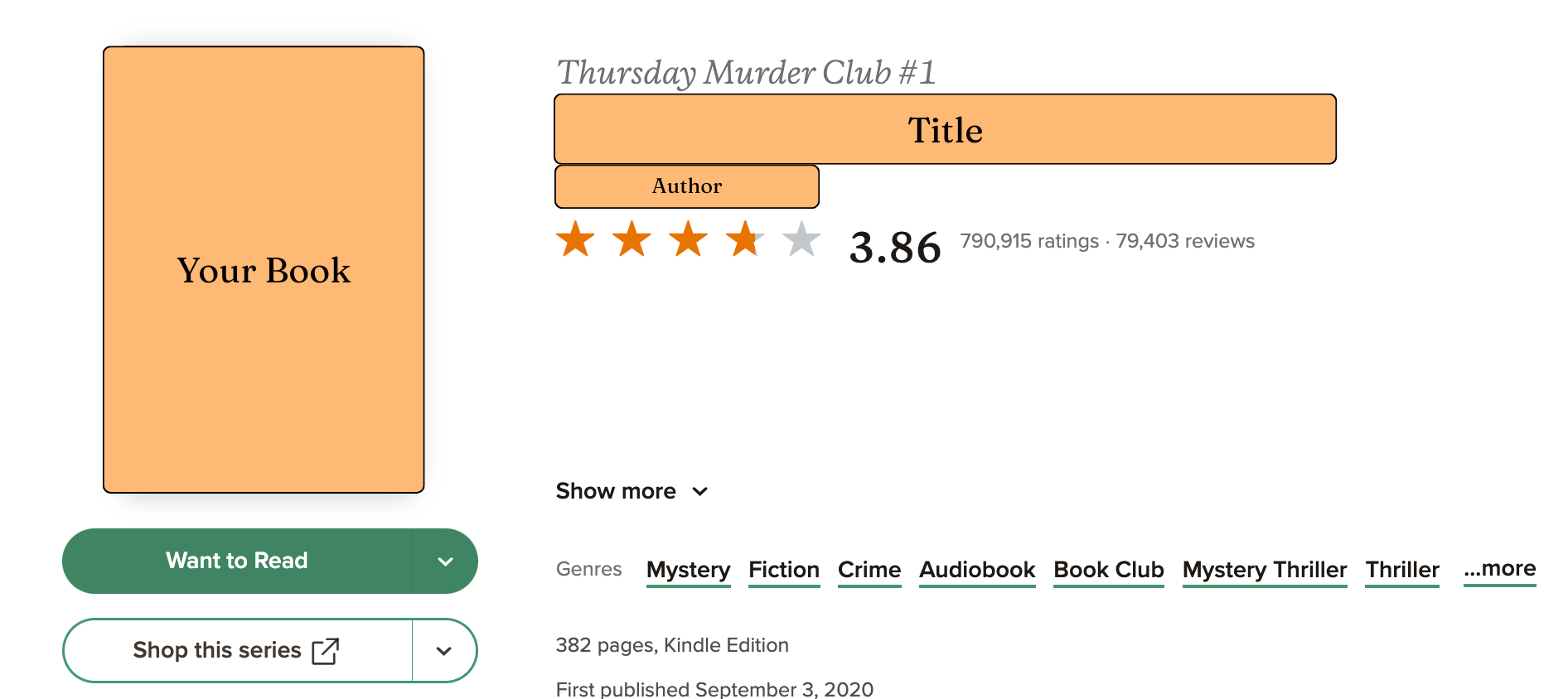
Your rating count is not just a number it's the first credibility signal every browser encounters
02 — WANT TO READ
Every Want to Read click is a vote of confidence, a broadcast to followers, and a signal to the algorithm
On Goodreads, the Want to Read button carries more weight than it first appears. A single click places a book on a reader’s default Want to Read shelf and can set off other Goodreads activity connected to that shelf, some of it visible to readers, and far less obvious from the author side.
When a reader adds your book to their Want to Read shelf, that title becomes part of their Goodreads activity and can appear in the feeds of friends or followers, depending on that reader’s settings. That gives each early shelf add the potential to extend your book’s visibility beyond a single click. For unreleased titles in particular, Want to Read adds are one of Goodreads’ clearest public signals of early interest, and Goodreads explicitly uses that kind of data in its anticipated-book features and popularity pages.
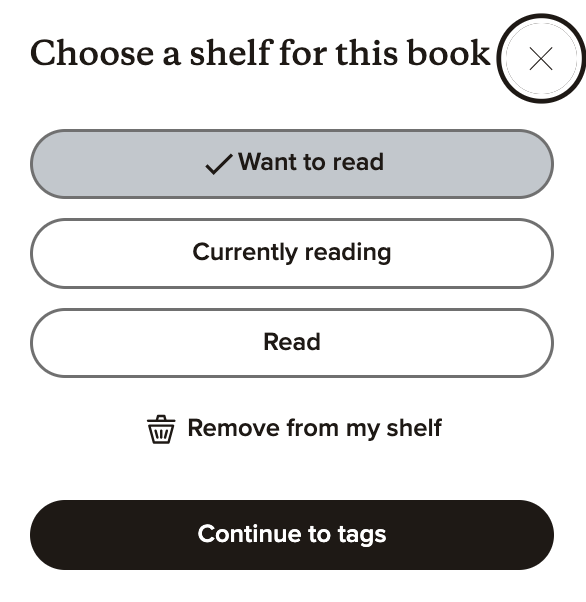
Want to Read shelf-adds are advance tickets to your launch each one is a reader who has told Goodreads they intend to read your book.
03 — LISTOPIA
Listopia is where readers go to find their next book. A book that ranks well here gets discovered by intent
Listopia and other high-visibility Goodreads lists can put a book in front of readers who browse by theme, mood, genre, or interest. Because these lists are created and ranked by Goodreads members, strong placement on a relevant, active list can improve a book’s visibility over time, especially on lists that attract large voting activity. What it cannot promise on its own is guaranteed discovery or lasting traction, so the value is best framed as meaningful exposure rather than certainty.

A strong Listopia position doesn't just bring readers today it builds a discovery asset that compounds over time.
04 — SHELVES
Shelves are how Goodreads understands what your book actually is and who should read it
On Goodreads, readers organise books through shelves, including custom shelves and tags they create themselves. A book can end up on shelves like dark-academia, slow-burn-romance, or reread-annually, which means readers are classifying it in their own language, not just through publisher metadata.
That matters because Goodreads uses member shelving as part of how books are described and connected on the site. Goodreads says a book’s genres are crowd-sourced from user shelves, and its recommendation tools have been described as drawing on shelf activity, including recommendations by shelf and how books are shelved together. In practical terms, shelf data helps shape the company a book keeps inside Goodreads.
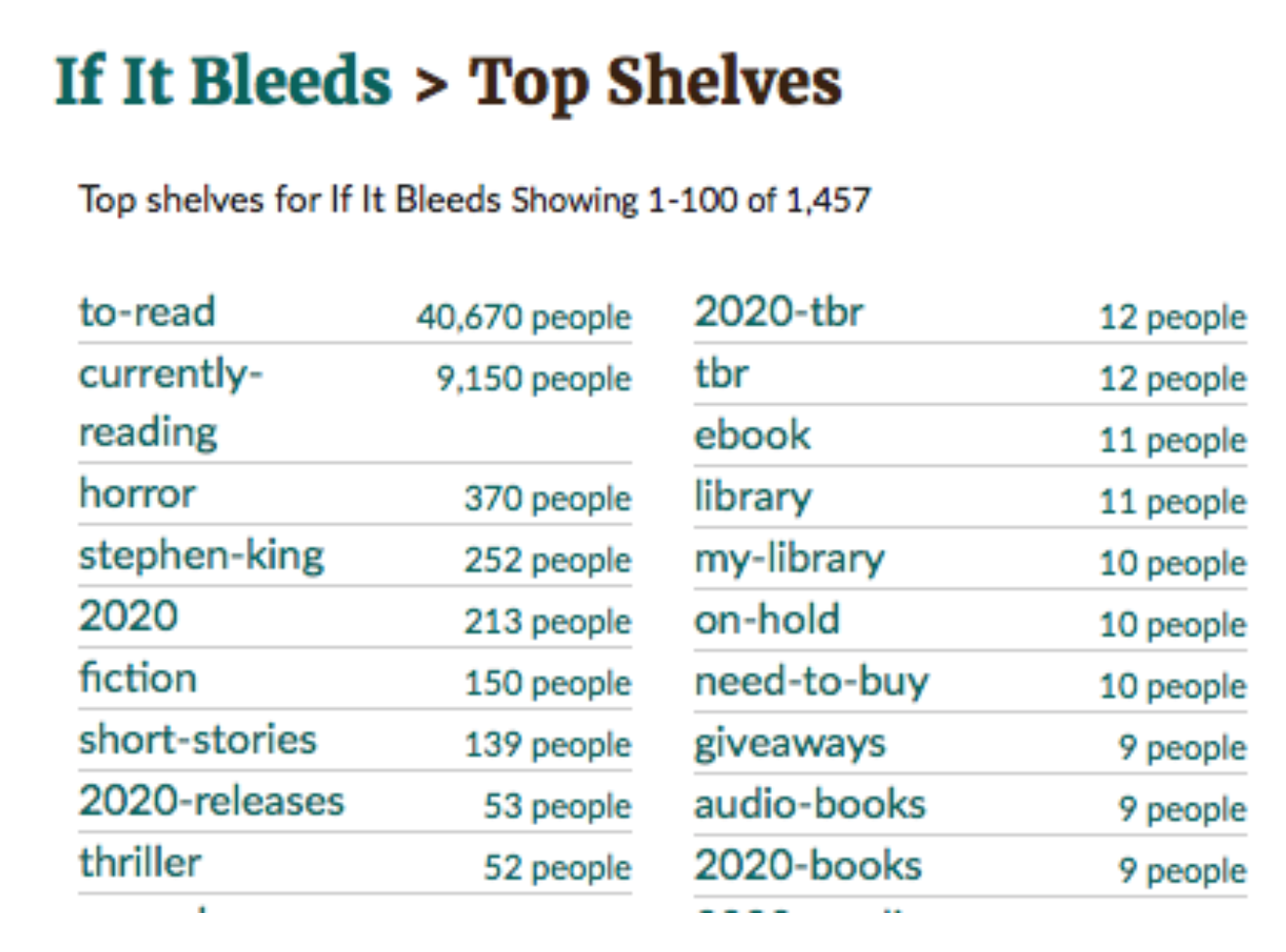
Every shelf your book lands on is another door Goodreads can open for the right reader.
05 — READERS ALSO ENJOYED
The Readers Also Enjoyed section is Goodreads' recommendation engine and appearing there multiplies your reach
On Goodreads, Readers Also Enjoyed remains a visible discovery section on many book pages, though its placement can vary and it does not appear on every title.
Goodreads has publicly described it as part of its recommendation engine, using patterns from member shelving and whether the same readers responded well to the same books. In practical terms, that gives a book repeat visibility beside adjacent titles through reader activity, not through a placement Goodreads publicly identifies as paid.
When that visibility begins to appear across several relevant pages, it can build into a broader layer of in platform discovery.
When your book appears in Readers Also Enjoyed on a bestseller's page, you are being made visible to every reader who browses that author's books on Goodreads.
06 — AUTHOR FOLLOW
Your Goodreads followers are a built-in broadcast list. Every update you post goes directly to their feed
Goodreads author profiles display a public follower count, and those followers can receive an author’s status updates and other visible activity in their updates feeds, depending on the author’s own posting settings and each follower’s feed preferences. An author’s profile can also surface reading activity such as recent shelf additions, progress updates, and reviews, so the follower count works best as a visible sign of reader interest rather than something you can confidently present as a proven driver of browsing decisions.
A strong follower count also functions as a social credibility signal. Readers who land on an author's profile page see the follower count immediately. A substantial count signals that other readers have found this author worth following a form of social proof that influences browsing decisions.
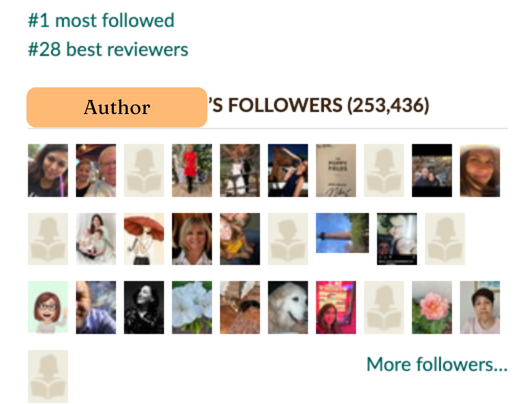
A Goodreads follower is a reader who has given you permission to show up in their reading life repeatedly.
07 — QUOTE LIKES
The right line from your book, in the hands of enough readers, becomes its own discovery engine
Goodreads has an established quotes feature where members can add passages, connect them to an author and, where available, to a specific book. Other users can like those quotes, and the quotes that gain traction can surface in Goodreads quote search and tag pages. For authors, that matters because a well-chosen line lets the writing do the talking. It gives readers a direct encounter with the voice on the page, and when a quote earns sustained attention, it can keep a book visible inside Goodreads well beyond a single promotional push.
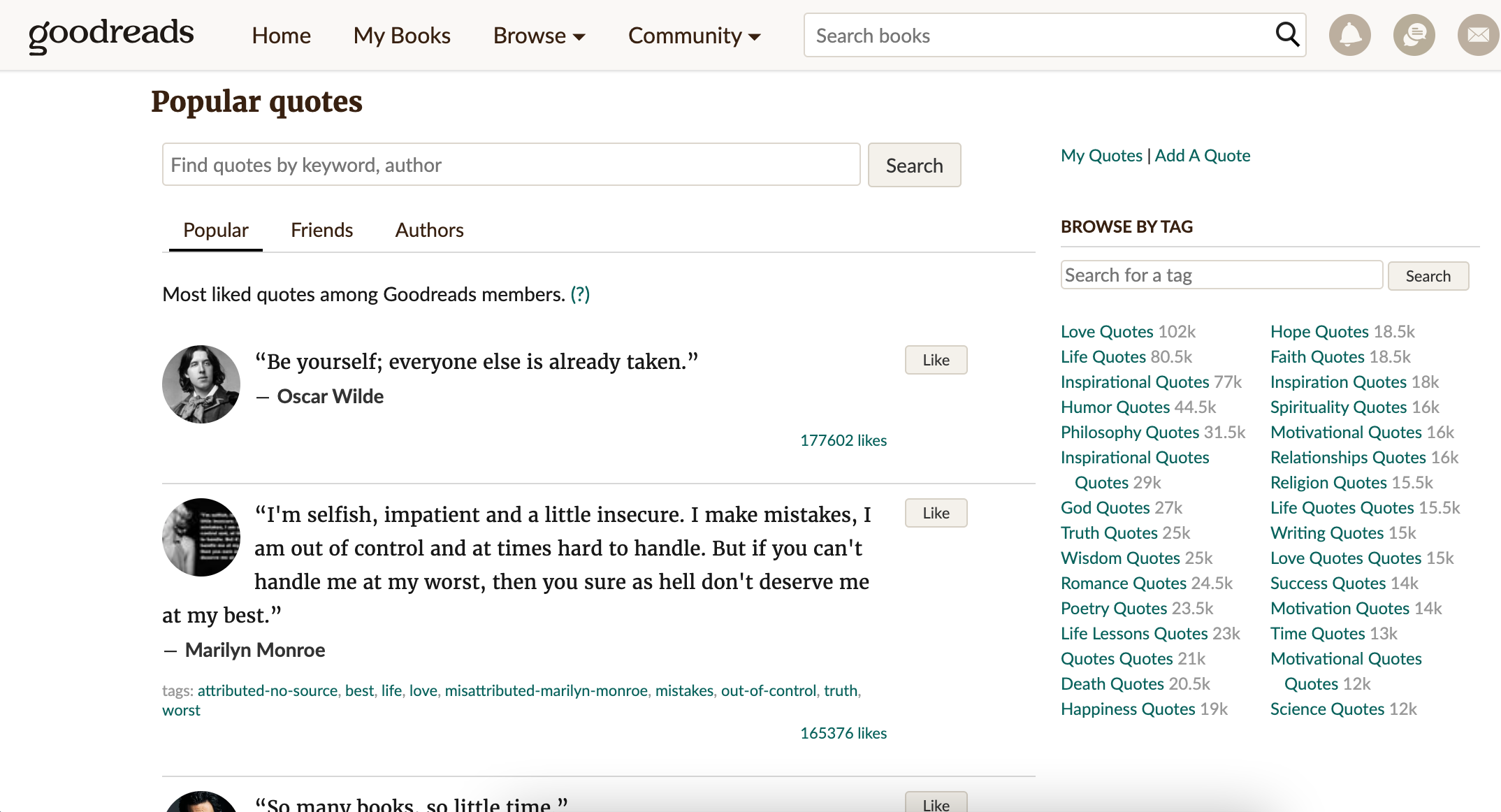
Your prose is your best marketing material and Goodreads is one of the few platforms where it can travel independently.
08 — REVIEW LIKES
The reviews at the top of your book page are not random.
They are chosen by reader votes
They are chosen by reader votes
On any Goodreads book page, reviews are displayed in an order determined partly by likes. Reviews that have received more likes from other readers surface higher in the default view. For a browser who only reads the first two or three reviews, this ordering is everything.
A book page where the top reviews are thoughtful, enthusiastic, and well liked presents a fundamentally different conversion environment than one where the top reviews are lukewarm or hostile. The same book, the same star average, but a different review order different outcomes.
Understanding that the review landscape on your book page is not fixed that it is shaped by ongoing reader engagement changes how you think about review activity. Encouraging readers to like reviews they found helpful is not gaming the system. It is participating in the system as Goodreads designed it.
The most important review on your book page is the one sitting at the top and that position is earned by other readers, not assigned.
Every mechanism covered in this guide is real, well documented, and genuinely influential. The ratings threshold effect is real. The Readers Also Enjoyed algorithm is real. The impact of Want to Read shelf-adds on pre-publication visibility is real.
A handful of ratings does not produce the threshold effect. A small number of Want to Read adds does not register as pre-publication momentum. Ten votes on a Listopia list does not build a top ten position. The mechanisms are real but they require scale to activate, and scale is where the individual author runs into a wall.
An individual author, operating alone, faces a structural challenge: the mechanisms that make the biggest difference are precisely the ones that require many readers acting in concert, across a sustained period, in a coordinated way. That is not something a single person can produce.
FAQs
-
How many ratings does a book need before it starts performing better on Goodreads?
Goodreads does not publish an official threshold for when a book begins to benefit from increased visibility, and any specific number you see quoted should be treated with caution. What is observable is that books with a few dozen ratings look qualitatively different to browsers than books with several hundred or several thousand. The shift is one of credibility rather than algorithmic eligibility, and it operates continuously rather than at a single fixed cut-off. Books generally accumulate more visible weight as the rating count grows, particularly past the low hundreds.
-
Are Want to Read shelf-adds visible to other readers?
Often, yes. When a reader adds your book to their Want to Read shelf, that activity can appear in the feeds of their friends and followers depending on the reader's individual privacy settings and notification preferences. This is what makes the mechanism more than a private bookmark. Each shelf-add is a small public broadcast within that reader's network, which is why concentrated Want to Read activity in the weeks before a release matters more than steady additions over months the network effect compounds when adds happen close together.
-
Can I get my book onto Listopia lists, or do readers do that?
Both. Goodreads members create and curate Listopia lists, and any member can add books to relevant lists. As an author you may add your own book to lists where it genuinely fits. What you cannot do is force placement: ranking on a list is determined by reader votes, not by who added the book. The most useful approach is identifying lists where your book legitimately belongs by genre, theme, or mood, and ensuring it is on those lists. Voting activity over time then determines visibility.
-
Why don't all my reviews appear at the top of my book page?
Goodreads orders reviews on a book page partly by likes reviews other readers have endorsed surface higher in the default view. This means review order is dynamic and reader-driven, not chronological or assigned by Goodreads. A thoughtful, well-written review posted three months ago can outrank a review posted yesterday if it has accumulated more likes. Encouraging readers who appreciate a review to like it is participating in the system as designed, not gaming it. The top three reviews shape conversion more than any other element on the page.
-
Does it matter what shelves readers put my book on?
It matters considerably. Goodreads uses crowd-sourced shelving as part of how books are categorised, recommended, and connected to other titles. A book consistently shelved as historical-fiction-with-romance behaves differently within the platform than the same book shelved primarily as romance, even if both are accurate. The shelves your book lands on shape which other books it appears alongside in recommendation surfaces and which readers it reaches through shelf-based discovery. Readers tagging in their own language is one of the more underappreciated discovery mechanisms on the platform.
-
How does the Readers Also Enjoyed section work?
Goodreads describes Readers Also Enjoyed as part of its recommendation engine, drawing on patterns from member shelving and reader behaviour particularly which readers engaged positively with which combinations of books. The section does not appear on every book page and its placement varies. When your book appears in the Readers Also Enjoyed feed of a more established title in your genre, you gain visibility to every reader browsing that title. Building this kind of cross-page presence is gradual and depends on accumulated reader signals rather than direct submission.
-
Does the number of Goodreads followers actually drive sales?
Treating the follower count as a direct sales driver overstates what it does. Followers receive your status updates and visible activity in their feeds depending on their settings, and the count itself functions as a credibility signal to readers landing on your profile. What it represents is permission readers have indicated they want to hear from you. Whether that permission converts to action depends on what you do with it. A high follower count with no posting activity does less work than a moderate follower count with consistent, substantive updates.
-
Why are quote likes worth caring about?
Quote likes are one of the few mechanisms on Goodreads where your prose itself does the discovery work. When a reader likes a quote from your book, that quote can surface in Goodreads' quote search, on tag pages, and in the activity feeds of the reader's network. A well-chosen passage that gains sustained attention keeps your book visible inside Goodreads beyond any single promotional campaign, because the quote travels independently. For authors whose voice is distinctive, quotes are a long-tail asset that compounds over years.
-
Can I respond to reviews or message readers who shelved my book?
Direct messaging readers based on their shelf activity is widely viewed as inappropriate within Goodreads culture and can result in reports against your account. The platform's convention is that reader activity shelving, rating, reviewing happens in reader space, and authors who reach out directly off the back of that activity overstep. The same principle applies to responding to reviews: even appreciative responses on negative reviews are typically counterproductive. The Author Dashboard and Ask the Author are the appropriate engagement channels.
-
Is buying ratings, reviews, or shelf-adds against Goodreads' rules?
Yes, unambiguously. Goodreads explicitly prohibits manipulative behaviour including fake accounts, purchased reviews, and incentivised votes or likes. Detection has improved over recent years and consequences range from removed reviews to permanent account termination, with reputational damage that extends beyond the platform itself. The mechanisms covered in this guide are real and powerful, but they require genuine reader engagement to activate. Anything that bypasses real readers risks the book's standing on Goodreads and the author's standing more broadly.
How Blacksun Can Help
This is precisely where Blacksun's reader database
changes everything
changes everything
Years of working closely within the Goodreads ecosystem have given Blacksun a clear understanding of how genuine reader activity shapes visibility on the platform. Real shelves, real ratings, real reviews, real quote activity, and real reader follow-through matter more than noise. Goodreads still supports core discovery features such as Want to Read shelving, Listopia, quotes, followers, and recommendation surfaces, so those are the areas where authentic engagement can still make a difference.
In practical terms, that means a strong campaign can help a book build credible movement across the Goodreads features discussed in this guide. Want to Read adds can grow. List visibility can improve. Follower numbers can rise. Quotes can circulate. Reviews can gain more visibility. Recommendation signals can strengthen as more real readers shelve, rate, and review a book. What cannot be claimed honestly is that these outcomes happen automatically or on command. Goodreads describes parts of this system as algorithmic and does not publicly disclose every threshold behind them.
We are not interested in gaming a platform. We are interested in helping books reach readers who are genuinely likely to love them, and in doing that work in a way that respects the platform, the reader, and the book itself. Goodreads explicitly prohibits manipulative behavior such as fake accounts, purchased reviews, and incentivized votes or likes, so that distinction matters.
We would love to hear about your book get in touch and tell us about your goals.
-
This email address is being protected from spambots. You need JavaScript enabled to view it.
Related guides
-
Claim Goodreads Authors profile
Goodreads is no longer simply a social cataloguing site. Since its acquisition by Amazon...
-

Claim Amazon Authors profile
Amazon Author Central costs nothing to join, takes less than an hour to establish, and gives your books a lasting.....
-

Claim BookBub Authors profile
BookBub is where ebook readers go to find their next book. It is not a social network....
-
Common Listing Errors
Discoverability isn’t only marketing. It’s metadata plumbing. And when it’s wrong, readers can’t reliably find you...
-
Get listed everywhere
ook discovery is not a passive outcome. It is the product of deliberate.....
- Details
- Category: Uncategorised
Book Discovery Strategy and Author Promotion for Indie Authors
Blacksun Book Reviews is an independent book-discovery and author-promotion service for indie and self-published authors. We research how books are represented and discovered across Goodreads, Amazon, BookBub, StoryGraph, LibraryThing, Hardcover, and search.
Our work includes book-specific discovery strategy, author-profile and listing guidance, platform positioning, and clearly defined promotional support.

Book discovery is shaped by accurate metadata, complete author profiles, clear book listings, platform rules, and genuine reader interest. Blacksun helps authors understand and strengthen those foundations through practical guidance and clearly defined promotional work.
-
This email address is being protected from spambots. You need JavaScript enabled to view it.
Strong books are often overlooked when author profiles, book records, editions, series information, or metadata are incomplete or inconsistent across the places readers search.
—About Blacksun
What Blacksun Helps Authors Do
Discoverability depends on whether a book and its author are accurately represented across the places readers search, browse, save, compare, and discuss books. Blacksun reviews those public discovery pathways and helps authors improve the areas most relevant to the book. The discoverability footprint guide
-
Author Profiles and Book Listings
Improve the public information readers and platforms use to identify an author, book, edition, and series.
-
Platform Discovery Strategy
Build a platform-specific discovery plan for Goodreads, Amazon, BookBub, StoryGraph, LibraryThing, Hardcover, and search.
-
Reader-Facing Promotion
Help interested readers encounter and understand a book through clearly defined promotional activity that respects platform rules.
-
Research-Led Promotion
Receive book-specific recommendations and a written scope describing the proposed work, deliverables, timing, and limits before purchase.
How Blacksun Works
Every project begins with the book, its intended audience, its current public presence, and the specific discovery problems that can reasonably be addressed.
-
Observe
Review the book, its intended audience, current listings, author profiles, metadata, editions, and public discovery footprint.
-
Diagnose
Identify inaccurate, incomplete, or inconsistent information and the discovery opportunities most relevant to the book.
-
Written Plan
Prepare a book-specific written plan with defined work, deliverables, timing, and limits.
-
Delivery
Complete the agreed promotional work and provide a clear record of what was delivered.
Why Blacksun Is Different
Blacksun provides book-specific, research-led work rather than generic campaigns. Every proposal states the recommended work, deliverables, timing, and limits before purchase.

Service Standards
Every proposal states the recommended work, deliverables, timing, and limits before purchase. Blacksun's responsibility is to complete the promotional work agreed in writing. Sales, rankings, reader response, and platform placement are outside the service's control.
Ready to go further?
Authors who want individual support can request a written proposal for their book. The proposal explains the recommended work, deliverables, timing, and service limits before any purchase decision.
-
This email address is being protected from spambots. You need JavaScript enabled to view it.
Start With the Guides
These guides explain the public book-discovery systems Blacksun researches and the practical steps authors can take independently.
-
Claim Goodreads Authors profile
Goodreads is no longer simply a social cataloguing site. Since its acquisition by Amazon...
-
Claim Amazon Authors profile
Amazon Author Central costs nothing to join, takes less than an hour to establish, and gives your books a lasting.....
-
Common Listing Errors
Discoverability isn’t only marketing. It’s metadata plumbing. And when it’s wrong, readers can’t reliably find you...
-
Goodreads
A complete guide to every Goodreads visibility mechanism.....
-

Why Reviews on Goodreads Matter
Your Goodreads page is not just a listing. It’s a credibility checkpoint. When a reader lands on your book page....
- Details
- Written by: Blacksun Book Reviews
- Category: Uncategorised